
Coconuts.
Those brown, furry fruit make you think of warm, remote islands and picture-perfect beaches. Most people know the taste. Many have seen them clinging to palm trees. Just thinking about them is enough to make some people smile.
But did you know they walk among us? You might be sitting next to one right now—on a plane, on a train, or even on your own couch.
And before you ask—no, I haven’t been snacking on suspicious mushrooms. Or sniffing glue. Nor do I believe I urgently need professional help. (Though my wife might argue otherwise.)
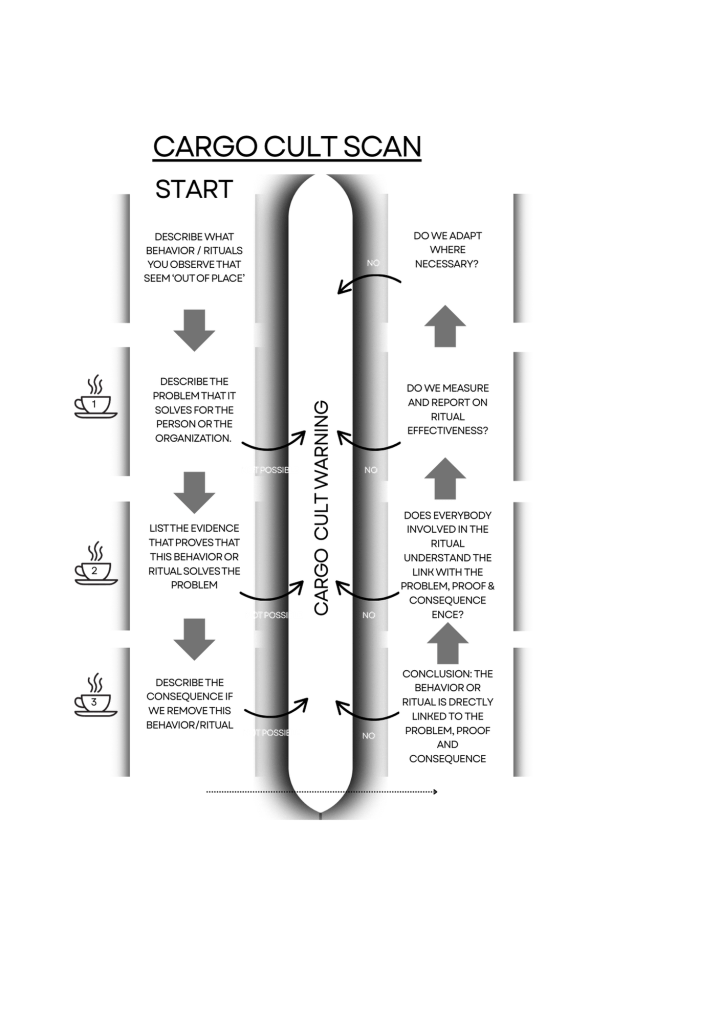
You see, in my circle—friends, family, colleagues—the word coconut has taken on a whole new meaning. It’s our shorthand for people who practice Cargo Cult thinking. The ones who have no clue what they’re doing but still believe they’ve struck gold. The ones who spread their “wisdom” like they’ve unlocked the secrets of the universe.
Meanwhile, absolutely nothing has changed.
Ever been on a diet, only to watch the kilos return with reinforcements? Ever sat through a meeting thinking, What in God’s name are we doing here?
Congratulations. You didn’t meet innovation. You met imitation.
I therefore call for questioning superficial actions and digging deeper to understand the root causes of success or personal growth. It’s a call for self-awareness, introspection, and the courage to move beyond mimicry toward genuine transformation.
I challenge those who mindlessly copy trends or behaviors, believing that by following certain practices they’ll unlock success or happiness—without understanding the deeper principles behind them.
It’s about highlighting the difference between superficiality and substance—the yawning gap between mimicking external behaviors and truly addressing the root causes of meaningful change.
The “Cargo Cult” mentality serves as a metaphor for these behaviors: individuals imitating the appearance of success (flashy habits, trendy tools, aesthetic checklists), while skipping the actual work, the discipline, and the strategy that create real transformation.
I encourage you to question your actions, develop sharper self-awareness, and prioritize authentic progress over the illusion of progress.
This is a call to go beyond appearances, examine your motivations, and do the actual work—not just copy what looks good.
Welcome to the world of make-belief.
 ivokoopmans.com